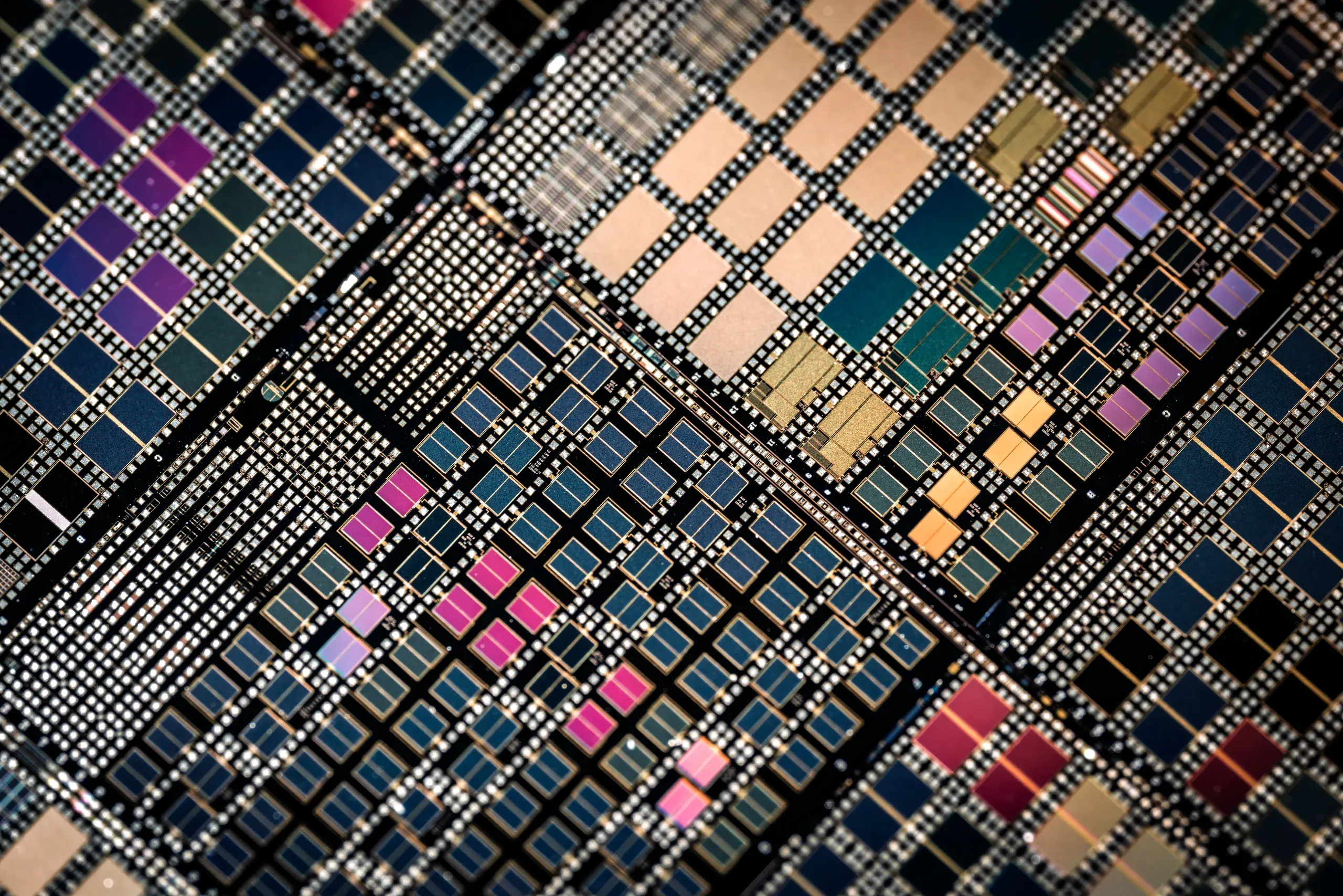
Equipment demos have a structural problem: the party running the demo also grades it. Left undefined, a demo drifts toward whatever the tool does well, and the report arrives as a handsome cross-section photo with impressive numbers measured under unstated conditions.
The cure is to treat the demo as an experiment with a pre-registered design. Everything below is agreed in writing before the first wafer is processed.
Agree what is being proven
A demo can prove different things, and they demand different designs:
- Feasibility — can this structure be made at all? One or two wafers, generous tolerances, exploratory recipes.
- Capability — can it be made to specification? Your geometry, your acceptance metrics, measured properly.
- Repeatability — can it be made to specification again? Multiple wafers, ideally across separate runs, with variation reported.
Most disputes trace back to a feasibility demo being read as a capability proof. Name the level explicitly.
Fix the samples and the mask
Results depend on pattern layout as much as on the tool. Decide together:
- Whose mask: your layout, or an agreed proxy pattern that represents your critical geometries (tightest pitch, largest open area, worst-case aspect ratio);
- Substrate type matching your stack — bulk, SOI, bonded — because interface effects like notching only appear on the real stack;
- How many wafers, and whether any are sacrificial for recipe development versus counted in the results.
If your real layout is confidential, an NDA and a proxy-pattern agreement come first. Sending sensitive designs through an open inquiry channel is a mistake no result can repay.
Write the success metrics
Each metric needs three parts: the number, the measurement method, and where it is measured. For a deep silicon etch, the usual set:
| Metric | Also specify |
|---|---|
| Depth and uniformity | Measurement points across the wafer; centre-to-edge definition |
| Profile angle | Where on the sidewall it is measured; bowing and notching limits |
| CD loss / mask undercut | Reference dimension and metrology method |
| Scallop / roughness | Only if your device cares — and then the measurement technique |
| Selectivity | To your actual mask material and thickness |
| Etch rate | Reported at the above conditions, not separately |
The last row matters most. Rate, profile and uniformity are one operating point, not three independent achievements.
Decide what the data will look like
Agree the report format in advance: raw measurement tables, not only summary averages; cross-section images with stated locations; run conditions recorded. Ask for the failures too — a lab that shows you the corner cases is telling you where the process window really is.
Repeatability is a separate question
One good wafer demonstrates an operating point exists. It says nothing about the next hundred. If the project is heading to production, ask for wafer-to-wafer data within a run and, where schedule allows, run-to-run data on separate days. Chamber conditioning and first-wafer effects are real; better to meet them in the demo than in your fab.
The demo is also an audition for the relationship
How a supplier handles demo definition predicts how they will handle your production problems: whether they push back on unmeasurable criteria, whether they document conditions honestly, whether they say “that we cannot do”. A supplier who negotiates the success criteria seriously is showing you their engineering culture. Pay attention.
We coordinate demos with written success criteria, sample logistics and structured evaluation reports — discuss your evaluation.